For many couples, trying to conceive is an exciting journey. However, when pregnancy does not happen despite regular unprotected intercourse, it can become stressful and emotionally difficult. There are many possible reasons why a couple may not be getting pregnant, and infertility can affect either partner or both.
Infertility Treatment in Pune begins with understanding the underlying cause rather than simply starting treatment. A detailed evaluation of both partners can help identify factors related to ovulation, egg quality, sperm health, fallopian tubes, the uterus, hormones, lifestyle, or other reproductive conditions.
Dr. Kanchan Durugkar, an experienced Obstetrician, Gynecologist, and Fertility & IVF Specialist at Grace IVF Fertility & IVF Centre, Moshi, Pune, provides personalized fertility evaluation and evidence-based treatment for couples facing difficulty conceiving. Her approach focuses on identifying the cause of infertility and recommending treatment according to the individual needs of each couple.
Meet Dr. Kanchan Durugkar – Fertility & IVF Specialist in Pune
Dr. Kanchan Durugkar is an experienced Obstetrician, Gynecologist, and Fertility & IVF Specialist dedicated to helping couples overcome fertility challenges with personalized and compassionate care.
She has completed her MBBS and MS (OBGY) from Government Medical College, Nagpur, followed by DNB (OBGY), Fellowship in IVF & Ultrasonography, Fellowship in Laparoscopy, and a Diploma in Assisted Reproductive Technology (ART) from Keil University, Germany.
Dr. Kanchan Durugkar has also worked with leading fertility centres, including Oasis Fertility and Yash IVF, and has served as an Assistant Professor at D. Y. Patil Medical College.
At Grace IVF Fertility & IVF Centre, Moshi, Pune, she provides comprehensive fertility care, including:
- Infertility evaluation
- IUI treatment
- IVF treatment
- PCOS management
- Ovulation-related fertility treatment
- Laparoscopic gynecology
- Fertility counselling
- Advanced reproductive care
She believes that every couple has a different fertility journey. Therefore, treatment should be planned after understanding their medical history, reproductive health, and parenthood goals.
When Is It Considered Infertility?
Not getting pregnant after trying for some time does not always mean that there is a serious fertility problem. However, persistent difficulty conceiving may indicate that a fertility evaluation is needed.
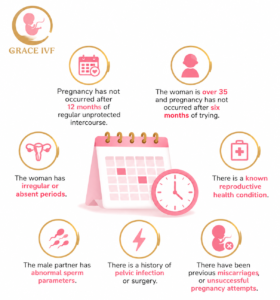
Generally, couples may consider consulting a fertility specialist if:
- Pregnancy has not occurred after 12 months of regular unprotected intercourse.
- The woman is over 35 and pregnancy has not occurred after six months of trying.
- The woman has irregular or absent periods.
- There is a known reproductive health condition.
- The male partner has abnormal sperm parameters.
- There is a history of pelvic infection or surgery.
- There have been previous miscarriages or unsuccessful pregnancy attempts.
Early evaluation can help identify potential problems and prevent unnecessary delays in treatment.
Why Am I Not Getting Pregnant? 10 Common Causes of Infertility
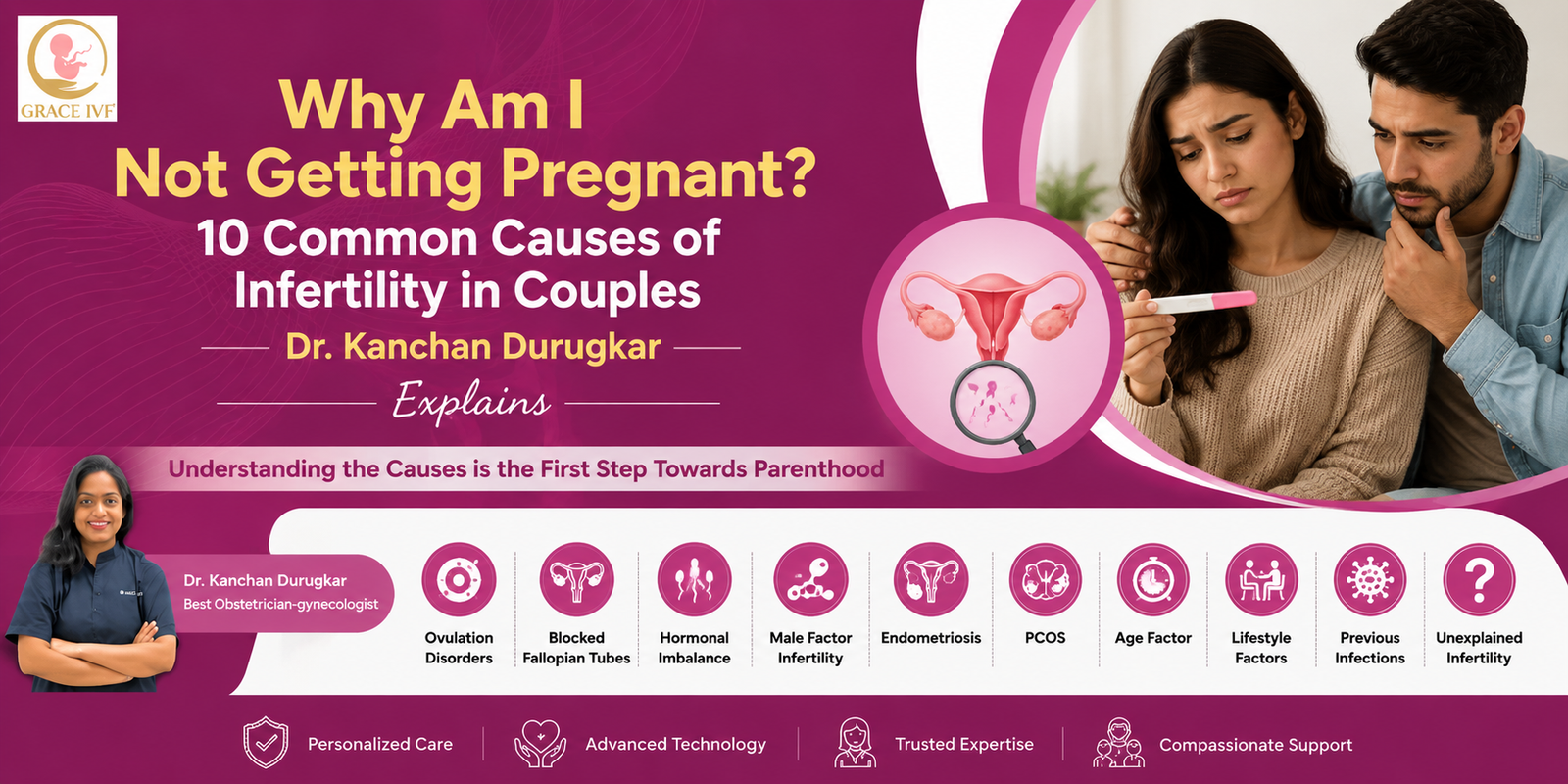
There is no single reason why every couple experiences difficulty conceiving. Infertility can result from female factors, male factors, combined factors, or sometimes no clearly identifiable cause.
Here are 10 common causes that may affect fertility.
1. Ovulation Problems
Ovulation is the process in which an ovary releases a mature egg. Regular ovulation is essential for natural conception.
When ovulation does not happen regularly, the chances of pregnancy may decrease.
Ovulation problems can be associated with:
- Irregular menstrual cycles
- Hormonal imbalance
- PCOS
- Thyroid disorders
- Significant weight changes
- Excessive exercise
- Certain medical conditions
Women with irregular periods may benefit from a fertility evaluation to determine whether ovulation is occurring regularly.
Depending on the cause, treatment may include lifestyle changes, medication, ovulation monitoring, or assisted reproductive treatments.
2. Polycystic Ovary Syndrome (PCOS)
PCOS is a common hormonal condition that can affect ovulation and fertility.
Women with PCOS may experience:
- Irregular periods
- Infrequent ovulation
- Acne
- Excess hair growth
- Weight changes
- Difficulty conceiving
However, having PCOS does not mean that pregnancy is impossible.
With appropriate evaluation and treatment, many women with PCOS can achieve pregnancy. Treatment may focus on improving ovulation and addressing other factors that may affect fertility.
If you have irregular periods or PCOS and are trying to conceive, consulting an Infertility Specialist in Pune can help determine the most suitable treatment approach.
3. Reduced Egg Quality or Ovarian Reserve
Age is an important factor in female fertility.
As a woman gets older, the number and quality of eggs gradually decrease. This can make conception more difficult and may also affect the chances of a healthy pregnancy.
Ovarian reserve can be evaluated using several methods, including:
- Medical history
- Ultrasound
- Antral follicle count
- AMH testing
- Other fertility-related investigations
A fertility specialist can interpret these results along with the woman’s age and overall reproductive health.
However, ovarian reserve testing alone cannot predict with certainty whether a woman will become pregnant. A complete fertility assessment is important for understanding the overall picture.
4. Blocked or Damaged Fallopian Tubes
The fallopian tubes play an important role in natural conception. They provide a pathway where the egg and sperm can meet.
If one or both fallopian tubes are blocked or damaged, sperm may not be able to reach the egg effectively.
Fallopian tube problems may occur because of:
- Previous pelvic infections
- Pelvic inflammatory disease
- Endometriosis
- Previous abdominal or pelvic surgery
- Certain reproductive conditions
Depending on the situation, a fertility specialist may recommend tests to evaluate whether the fallopian tubes are open.
If both tubes are significantly blocked, treatments such as IVF may be considered because IVF does not require the egg and sperm to meet inside the fallopian tube.
5. Endometriosis
Endometriosis is a condition in which tissue similar to the lining of the uterus grows outside the uterus.
It may affect fertility in several ways and can sometimes be associated with:
- Pelvic pain
- Painful periods
- Pain during intercourse
- Difficulty conceiving
- Ovarian cysts
The effect of endometriosis on fertility varies from woman to woman.
Depending on the severity, age, ovarian reserve, symptoms, and fertility goals, treatment may include medication, surgery, fertility treatment, or assisted reproductive techniques.
6. Male Factor Infertility
Infertility is not only a female health concern. Male factors contribute to a significant proportion of infertility cases.
Problems with sperm can affect the ability to conceive.
Common male fertility factors include:
- Low sperm count
- Poor sperm motility
- Abnormal sperm morphology
- Hormonal problems
- Certain infections
- Varicocele
- Lifestyle factors
- Some medications or medical conditions
A semen analysis is usually one of the important initial investigations for evaluating male fertility.
Both partners should be evaluated because fertility is a couple-based issue, not only a woman’s concern.
7. Uterine or Structural Problems
The uterus needs to be healthy for implantation and pregnancy to develop properly.
Certain structural conditions may affect fertility, including:
- Uterine fibroids
- Endometrial polyps
- Uterine abnormalities
- Scar tissue inside the uterus
- Adenomyosis in selected cases
Some women may have these conditions without obvious symptoms.
Depending on the suspected problem, your fertility specialist may recommend ultrasound or other investigations to understand the condition more clearly.
Treatment depends on the size, location, symptoms, and effect of the condition on fertility.
8. Hormonal or Thyroid Imbalances
Hormones play an important role in ovulation, menstrual cycles, egg development, and reproductive health.
Conditions affecting hormones may interfere with conception.
For example, thyroid disorders can affect menstrual cycles and ovulation. Other hormonal problems may also influence fertility.
A fertility evaluation may include appropriate blood tests based on the woman’s symptoms and medical history.
If a hormonal problem is identified, treating the underlying condition may improve reproductive health and may be an important part of Infertility Treatment in Pune.
9. Lifestyle and Environmental Factors
Lifestyle does not explain every case of infertility, but certain habits and environmental factors can influence reproductive health.
Factors that may affect fertility include:
- Smoking
- Excessive alcohol consumption
- Drug use
- Obesity or being significantly underweight
- Poor diet
- Chronic stress
- Lack of physical activity
- Poor sleep
- Excessive exposure to certain environmental toxins
For men, smoking, excessive alcohol use, obesity, heat exposure, and certain medications may also affect sperm health.
Maintaining a balanced lifestyle can support overall reproductive health. However, lifestyle changes should not replace medical evaluation when infertility persists.
10. Unexplained Infertility
Sometimes, fertility tests do not identify a clear reason why a couple is not conceiving.
This is known as unexplained infertility.
It does not mean that pregnancy is impossible. Instead, it means that standard fertility investigations have not identified an obvious cause.
Depending on the couple’s age, duration of infertility, previous treatment, and fertility test results, treatment options may include:
- Fertility medications
- Ovulation monitoring
- IUI
- IVF
- Other assisted reproductive techniques
Dr. Kanchan Durugkar evaluates the complete fertility history before recommending the next step.
How Is Infertility Diagnosed?
Infertility Treatment in Pune should begin with an appropriate fertility evaluation.
Since infertility can affect either partner, evaluation of both the male and female partner is important.
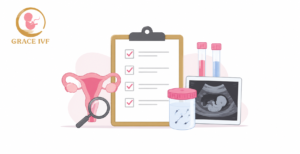
Depending on the individual situation, investigations may include:
For Women
- Menstrual and medical history
- Ovulation assessment
- Pelvic ultrasound
- AMH or ovarian reserve assessment
- Hormonal investigations when required
- Evaluation of fallopian tubes
- Uterine assessment
For Men
- Semen analysis
- Medical and reproductive history
- Hormonal testing when required
- Further evaluation if abnormal sperm parameters are identified
Not every couple needs every test. The fertility specialist decides which investigations are appropriate based on the couple’s history and symptoms.
What Infertility Treatment Options Are Available?
Treatment depends on the underlying cause, the woman’s age, ovarian reserve, sperm health, duration of infertility, and previous treatment history.
Possible treatment options include:
Lifestyle and Medical Management
Some couples may benefit from improving lifestyle factors or treating an underlying medical or hormonal condition.
Ovulation Induction
Women with ovulation problems may be prescribed medications to help stimulate or regulate ovulation.
Ovulation monitoring may be performed using ultrasound and other assessments when required.
IUI Treatment
IUI Treatment in Pune may be recommended for selected couples with conditions such as unexplained infertility, mild male factor infertility, ovulation problems, or other suitable situations.
During IUI, specially prepared sperm are placed directly into the uterus around the time of ovulation.
IVF Treatment
IVF may be recommended when other fertility treatments are unlikely to be effective or have not resulted in pregnancy.
In IVF, eggs are collected from the ovaries and fertilized with sperm in a laboratory. The resulting embryo is then transferred into the uterus.
IVF may be considered for conditions such as:
- Blocked fallopian tubes
- Certain cases of male factor infertility
- Reduced ovarian reserve in selected situations
- Advanced maternal age
- Severe endometriosis
- Repeated unsuccessful fertility treatments
- Some cases of unexplained infertility
The right treatment depends on the individual couple.
When Should You See an Infertility Specialist?
You do not always need to wait for a full year before seeking professional advice.
Consider consulting a fertility specialist if:
- You have been trying to conceive for 12 months without success.
- You are over 35 and have been trying for six months.
- Your menstrual cycles are irregular.
- You have PCOS or another known reproductive condition.
- You have had previous pelvic surgery.
- You have a history of endometriosis.
- Your partner has known sperm abnormalities.
- You have experienced repeated miscarriages.
- You have previously undergone unsuccessful fertility treatment.
- You are concerned about your fertility and want an early evaluation.
Early consultation can help identify possible fertility factors and provide a clear treatment plan.
Why Choose Dr. Kanchan Durugkar for Infertility Treatment in Pune?
Dr. Kanchan Durugkar is a Fertility & IVF Specialist who provides personalized fertility care based on each couple’s medical needs and reproductive goals.
At Grace IVF Fertility & IVF Centre, Moshi, Pune, couples receive comprehensive fertility evaluation and treatment in a supportive environment.
Couples choose Dr. Kanchan Durugkar for:
- Experienced Fertility & IVF Specialist
- Expertise in infertility evaluation and treatment
- Experience in IUI and IVF
- Fellowship in IVF & Ultrasonography
- Fellowship in Laparoscopy
- Diploma in Assisted Reproductive Technology (ART), Germany
- Personalized treatment planning
- Advanced fertility evaluation
- Patient-focused counselling
- Evidence-based fertility care
- Comprehensive reproductive health services
Dr. Kanchan believes in explaining fertility problems and treatment options in simple language so couples can make informed decisions about their care.
Summary
Not getting pregnant can happen for many different reasons, and infertility does not always have a single identifiable cause. Ovulation problems, PCOS, reduced ovarian reserve, blocked fallopian tubes, endometriosis, male factor infertility, uterine problems, hormonal disorders, lifestyle factors, and unexplained infertility can all contribute to difficulty conceiving.
The good news is that many fertility problems can be evaluated and treated with appropriate medical care.
Infertility Treatment in Pune should always be personalized according to the couple’s age, medical history, fertility test results, and reproductive goals.
At Grace IVF Fertility & IVF Centre, Dr. Kanchan Durugkar provides comprehensive fertility evaluation, IUI, IVF, and other reproductive treatments with a compassionate and patient-centred approach.
If you have been trying to conceive without success, seeking professional fertility guidance can help you understand the possible cause and choose the next appropriate step toward parenthood.
FAQs – Infertility Treatment in Pune
Why am I not getting pregnant even though my periods are regular?
Regular periods usually suggest that ovulation may be occurring, but they do not guarantee that all fertility factors are normal. Fertility can also be affected by sperm quality, fallopian tube blockage, endometriosis, egg quality, uterine conditions, or other factors. A complete fertility evaluation can help identify the possible reason.
How long should I try to conceive before seeing a fertility specialist?
If you are under 35, it is generally recommended to seek evaluation after 12 months of regular unprotected intercourse without pregnancy. If you are 35 or older, consider consulting a fertility specialist after six months of trying. Earlier evaluation may be appropriate if you have irregular periods or a known fertility condition.
Can PCOS cause infertility?
Yes. PCOS can interfere with regular ovulation and make conception more difficult. However, many women with PCOS can become pregnant with appropriate medical management and fertility treatment when required.
Can men also be responsible for infertility?
Yes. Male factors can contribute significantly to infertility. Low sperm count, poor sperm movement, abnormal sperm shape, hormonal problems, and certain medical or lifestyle factors can affect fertility. A semen analysis is commonly used as an initial test to assess male fertility.
Can blocked fallopian tubes cause infertility?
Yes. Blocked or damaged fallopian tubes can prevent the sperm and egg from meeting naturally. Depending on the condition, fertility treatment such as IVF may be considered.
Is unexplained infertility treatable?
Yes. Even when standard fertility tests do not identify a clear cause, treatment options may still be available. Depending on the couple’s circumstances, treatment may include ovulation induction, IUI, IVF, or other assisted reproductive techniques.
What tests are done for infertility?
The tests depend on the couple’s individual medical history. They may include ovulation assessment, pelvic ultrasound, ovarian reserve testing, fallopian tube evaluation, hormonal tests, and semen analysis. Your fertility specialist will recommend the investigations that are appropriate for you.
Can lifestyle changes improve fertility?
Healthy lifestyle habits can support reproductive health. Maintaining a healthy weight, eating a balanced diet, exercising regularly, avoiding smoking and excessive alcohol, managing stress, and getting adequate sleep may be beneficial. However, lifestyle changes should not replace fertility evaluation when pregnancy is not occurring.
When is IUI recommended for infertility?
IUI may be recommended for selected couples with unexplained infertility, mild male factor infertility, ovulation problems, or other suitable conditions. The decision depends on factors such as age, ovarian reserve, sperm quality, and the cause and duration of infertility.
When is IVF recommended?
IVF may be considered for blocked fallopian tubes, certain cases of severe male factor infertility, reduced ovarian reserve in selected situations, advanced maternal age, severe endometriosis, or when other fertility treatments have not been successful. The most suitable treatment depends on the individual couple.
Conclusion – Why Am I Not Getting Pregnant? 10 Common Causes of Infertility in Couples
Difficulty getting pregnant can be emotionally challenging, but it does not mean that parenthood is out of reach. Infertility may result from several factors affecting either partner, including ovulation problems, PCOS, egg quality, blocked fallopian tubes, endometriosis, sperm abnormalities, hormonal conditions, uterine problems, lifestyle factors, or unexplained infertility.
Understanding the underlying cause is the first step toward choosing the right treatment.
At Grace IVF Fertility & IVF Centre, Moshi, Pune, Dr. Kanchan Durugkar provides personalized fertility evaluation and evidence-based treatment options, including IUI and IVF. With advanced training in reproductive medicine, a patient-focused approach, and compassionate counselling, she helps couples understand their fertility concerns and make informed decisions.
If you have been trying to conceive without success, consulting an experienced Infertility Specialist in Pune can help you understand your options and plan the next step toward your dream of parenthood.