PCOM Treatment & Evaluation in Pune
Finding multiple small follicles on an ovarian ultrasound can sometimes create confusion, especially when a woman is trying to understand what the report means for her periods, ovulation or fertility. PCOM Treatment & Evaluation in Pune focuses on understanding the ovarian appearance seen on ultrasound and determining whether it is associated with any reproductive or hormonal concern.
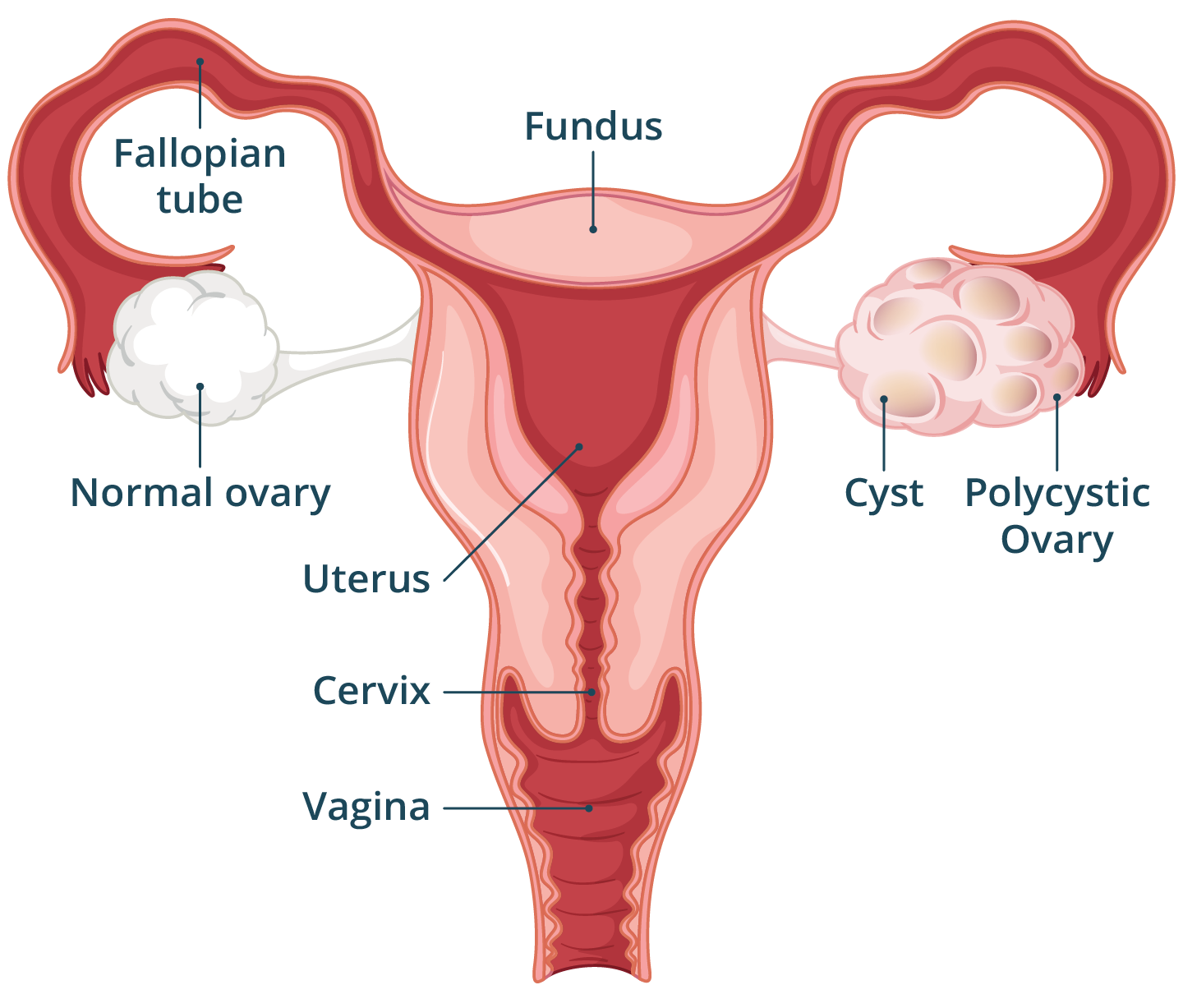
Polycystic Ovarian Morphology, commonly called PCOM, describes an ovarian appearance in which a higher number of small follicles and/or increased ovarian volume may be seen on ultrasound. It is important to understand that PCOM is not the same as PCOS. A woman can have PCOM without having the hormonal or ovulatory features required for a diagnosis of PCOS. Therefore, proper assessment is important before starting any treatment.
At Grace IVF Fertility & IVF Centre in Moshi, Pune, the approach to PCOM Treatment & Evaluation in Pune begins with understanding the individual patient’s menstrual pattern, ovulation, symptoms, medical history and fertility goals. The aim is not simply to treat an ultrasound finding, but to identify whether any underlying reproductive issue needs attention.
Understanding What PCOM Means on an Ultrasound
PCOM Diagnosis in Pune generally involves looking at the ovaries through ultrasound and assessing their follicle pattern and size. Modern ultrasound assessment may consider the follicle number per ovary and ovarian volume. According to the international evidence-based guideline, follicle number per ovary is an important ultrasound marker for PCOM in adults.
A report showing polycystic ovarian morphology does not automatically mean that a woman has a hormonal disorder. Some women with PCOM have regular menstrual cycles, normal ovulation and no difficulty conceiving. Others may have irregular periods or other symptoms that require further evaluation.
This is why PCOM Ultrasound in Pune should be interpreted along with the patient’s clinical history rather than being considered in isolation. The ultrasound findings, menstrual cycle pattern, ovulation status and other relevant investigations may all contribute to understanding the overall reproductive picture.
PCOM and PCOS Are Not the Same Condition
One of the most common concerns after an ultrasound report mentions PCOM is whether the woman has PCOS. The two terms are related but they are not interchangeable.
PCOM refers mainly to the appearance of the ovaries. PCOS is a broader endocrine and reproductive condition involving features such as ovulatory dysfunction and hyperandrogenism, with polycystic ovarian morphology being one possible component of the diagnostic assessment. In some adults with irregular menstrual cycles and hyperandrogenism, an ovarian ultrasound may not even be necessary to establish the diagnosis.
Therefore, PCOM and Fertility in Pune should be assessed according to the individual’s symptoms and reproductive goals. If periods are regular and ovulation is occurring, the ultrasound appearance may not require specific treatment. If there are irregular cycles, difficulty conceiving or other concerns, further fertility assessment may be appropriate.
When Does PCOM Need Further Evaluation?
Not every woman with PCOM needs medication. However, further assessment may be considered when there are associated reproductive symptoms.
Common situations include:
- Irregular or unpredictable menstrual cycles
- Difficulty identifying ovulation
- Difficulty conceiving
- Long or frequently missed periods
- Signs of hormonal imbalance
- Symptoms suggesting androgen excess
- Concerns about fertility
- An ultrasound report showing PCOM along with reproductive symptoms
During PCOM Management in Pune, the focus should therefore remain on the complete clinical picture rather than the ultrasound terminology alone.
For example, two women may have similar ultrasound findings but require completely different approaches. One may have regular periods and no fertility concerns, while another may have irregular ovulation and difficulty conceiving. The ultrasound finding is similar, but the clinical situation is different.
How Is PCOM Evaluated?
A detailed PCOM Evaluation in Pune may begin with a discussion about menstrual history and reproductive health. The doctor may ask about cycle length, missed periods, previous pregnancies, fertility history, symptoms and any previous ultrasound findings.
Menstrual and Ovulation Assessment
Understanding whether ovulation is occurring regularly is an important part of the assessment. Irregular cycles can sometimes indicate ovulatory dysfunction, but menstrual patterns alone do not establish the cause.
Ultrasound Assessment
An Ovarian Ultrasound in Pune may be used to assess follicle number, ovarian size and other pelvic structures. The 2023 international guideline recommends standardized ultrasound reporting, including details such as follicle number and ovarian measurements.
Hormonal Assessment
Depending on the symptoms and clinical situation, the doctor may recommend selected blood tests. These are not identical for every woman. Testing should be based on the suspected underlying issue rather than performed simply because PCOM has appeared on an ultrasound report.
Fertility Assessment
For women trying to conceive, PCOM and Fertility in Pune may be evaluated together with other factors affecting conception. The assessment may include ovulation, reproductive history and, where appropriate, evaluation of other fertility factors.
PCOM and Fertility: What Should Women Know?
A PCOM finding can raise questions about fertility, but it does not automatically mean that pregnancy will be difficult.
Some women with PCOM ovulate normally and conceive without fertility treatment. In other women, PCOM may be present alongside irregular ovulation or another reproductive condition that can affect conception.
This distinction is important when discussing PCOM Treatment & Evaluation in Pune. Treatment is generally directed toward the underlying problem rather than attempting to “remove” the ovarian appearance itself.
For women with irregular ovulation who are trying to conceive, the fertility plan may involve monitoring ovulation and considering appropriate fertility treatment based on the individual’s situation. If another condition is identified, that condition may need to be managed as part of the fertility plan.
Treatment Depends on the Underlying Concern
There is no single medicine that is appropriate for every woman with PCOM. PCOM Treatment & Evaluation in Pune should be individualized according to symptoms, reproductive goals and the findings from the assessment.
For a woman who has PCOM but regular cycles and no fertility concern, treatment may not be required solely because of the ultrasound appearance.
For someone experiencing irregular ovulation, the management may focus on restoring or supporting ovulation. Women who are trying to conceive may require fertility-focused management, while women who are not currently planning pregnancy may have different treatment priorities.
This is why PCOM Management in Pune should begin with evaluation rather than automatically starting medication.
PCOM Evaluation When Pregnancy Is Planned
Women planning pregnancy may have additional questions after receiving a PCOM ultrasound report. In such cases, PCOM Fertility Treatment in Pune should be based on the complete fertility assessment.
The doctor may review:
- Menstrual cycle regularity
- Evidence of ovulation
- Previous pregnancy history
- Duration of trying to conceive
- Other reproductive conditions
- Relevant hormonal investigations
- Partner-related fertility factors when appropriate
The purpose of PCOM Diagnosis in Pune in this setting is not simply to label the ovaries but to understand whether the ultrasound finding has any relevance to conception.
If ovulation is irregular, treatment may be directed toward ovulation. If ovulation is normal, another fertility factor may need to be considered instead.
Why a Detailed Assessment Matters
An ultrasound report can provide useful information, but it is only one part of a fertility evaluation. Modern guidelines emphasize standardized assessment of PCOM and note that ultrasound thresholds may vary with technology, technique and clinical circumstances.
For this reason, PCOM Ultrasound in Pune should be interpreted by considering the complete clinical context.
A proper evaluation can help avoid two common problems: unnecessary treatment for an isolated ultrasound finding and overlooking another condition that may actually be responsible for irregular periods or difficulty conceiving.
At Grace IVF Fertility & IVF Centre, Moshi, Pune, PCOM Evaluation in Pune can be integrated with a broader fertility assessment when required. Dr. Kanchan Durugkar’s fertility-focused approach considers the patient’s symptoms, reproductive plans and investigation results before discussing the next step.
PCOM Assessment at Grace IVF Fertility & IVF Centre
At Grace IVF Fertility & IVF Centre, Moshi, Pune, the approach to PCOM Treatment & Evaluation in Pune is centered on understanding the individual rather than treating an ultrasound report in isolation.
The evaluation may combine menstrual history, clinical assessment, ultrasound findings and relevant investigations. When fertility is the concern, the assessment can also consider ovulation and other factors that may influence conception.
Dr. Kanchan Durugkar has experience in fertility care, ovulation-related concerns, PCOS management, IUI and IVF. Her approach involves explaining the findings in simple language so that patients understand what their ultrasound report means and whether any treatment is actually required.
FAQ
FAQs – Ovulation Induction Treatment in Pune
No. PCOM describes a particular ovarian appearance on ultrasound, while PCOS is a broader reproductive and endocrine condition. PCOM alone does not establish a diagnosis of PCOS.
Yes. PCOM does not automatically mean infertility. Some women with PCOM ovulate regularly and conceive naturally. Fertility depends on several factors, including ovulation and other reproductive factors.
No. PCOM Treatment & Evaluation in Pune depends on the clinical situation. An isolated ultrasound finding in a woman without symptoms or fertility concerns may not require treatment.
Ovarian Ultrasound in Pune may assess follicle number, ovarian volume and other pelvic features. Current adult PCOM assessment emphasizes follicle number per ovary and standardized ultrasound reporting.
PCOM itself is an ultrasound finding and does not necessarily cause irregular periods. If cycles are irregular, the underlying reason for ovulatory dysfunction should be evaluated.
PCOM and Fertility in Pune can be related when PCOM occurs alongside irregular ovulation or another reproductive condition. However, PCOM alone does not mean that conception will be difficult.
The next step is usually a clinical evaluation rather than immediately starting treatment. PCOM Diagnosis in Pune should consider menstrual history, symptoms, ovulation and other relevant findings.
No. PCOM Fertility Treatment in Pune is considered only when there is an identified fertility concern or ovulatory problem requiring management.